


Hydrangeas - Part 2 - Panicle
The Hydrangea Story Continued!
In our last blog post, we began a 2-part series on Hydrangeas. We spent most of our time talking about Macrophylla types (also known as Bigleaf Hydrangeas). In today’s segment, we will look at the popular Panicle Hydrangeas, as well as Smooth Hydrangeas.
Panicle Hydrangeas
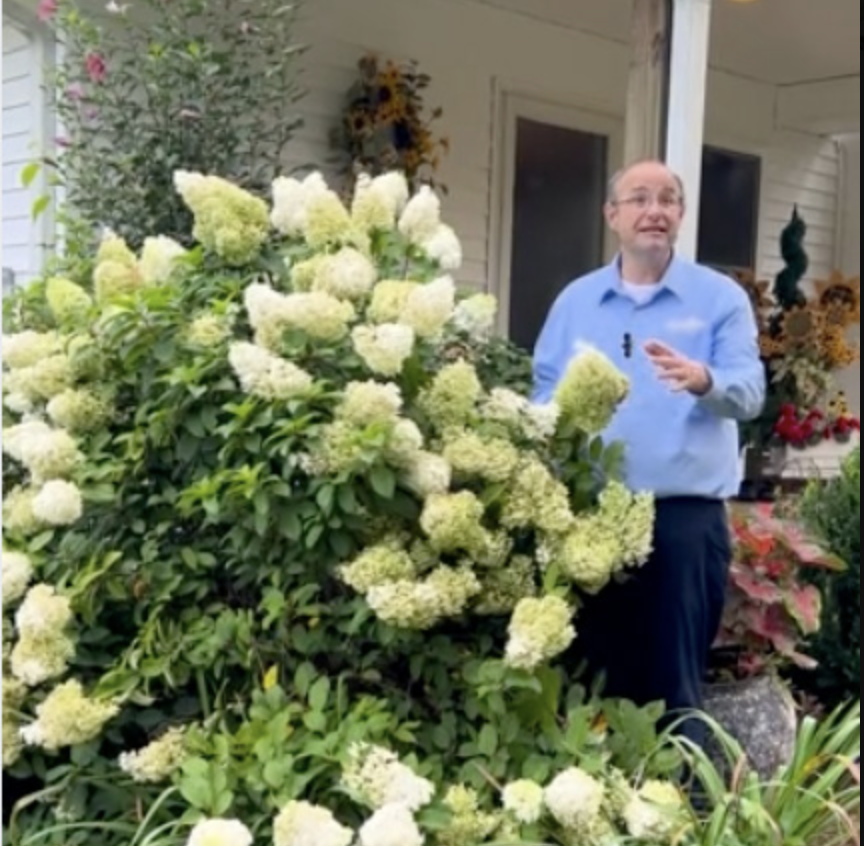
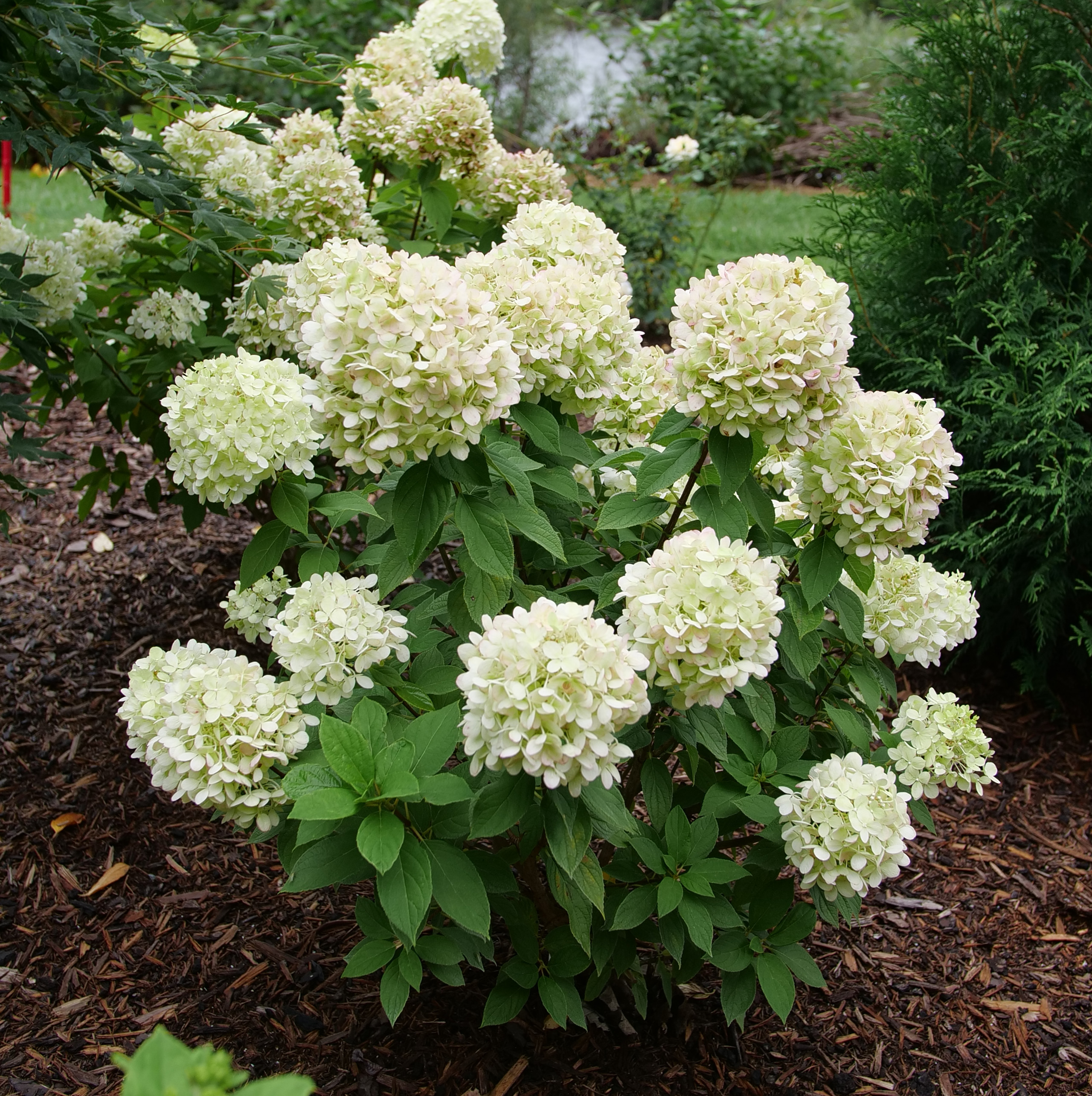
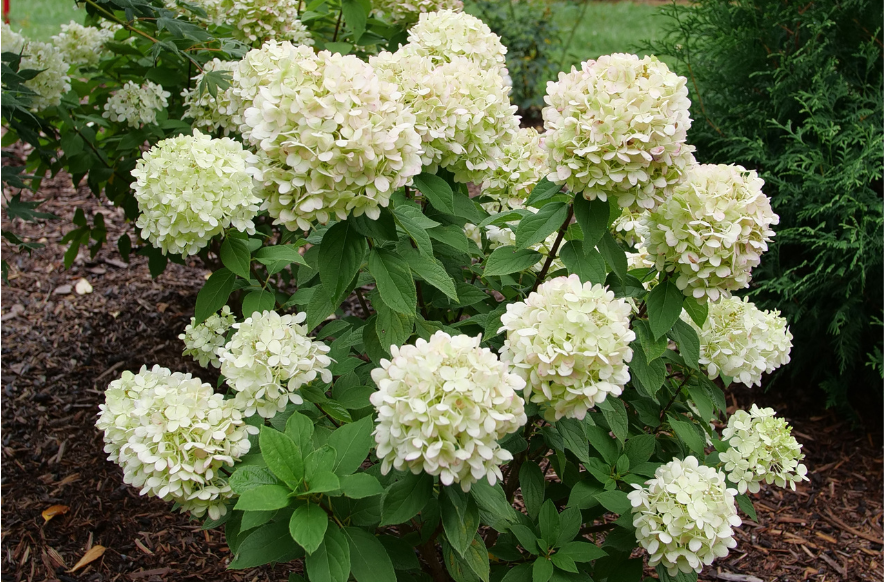
Panicle Hydrangeas are your Limelight types. These tend to start out with blooms that are light green or cream and fade to white, before fading to a shade of pink or red (more on that later). The blooms of Panicle Hydrangeas tend to be conical shaped, although there are a few newer varieties that break this rule. In general, Panicle Hydrangeas are much hardier than Macrophylla types. In the north, Panicles will take all day sun. In the south, it is still recommended that they get a little late evening shade to protect the foliage, although they will take full sun. Just be prepared for some late summer leaf burn.
Panicle Hydrangeas all bloom on new wood, so less caution can be taken when pruning. However, I highly recommend that you plant a variety that fits the space you are filling, as they come in all sizes. For instance, Firelight Tidbit stays around 3’ tall, whereas Limelight can get 10’+ if allowed to grow freely. Also, keep in mind that in the south, Panicles tend to grow slightly larger than advertised. A personal example at my house is a variety called “Bobo”. This is a beautiful variety with white blooms that is supposed to max out between 3-4’ tall. However, I have 2 by my porch that are nearly 6’. Personally, the only trimming I do is remove last year’s blooms sometime in January.
Panicle’s One Pest Issue
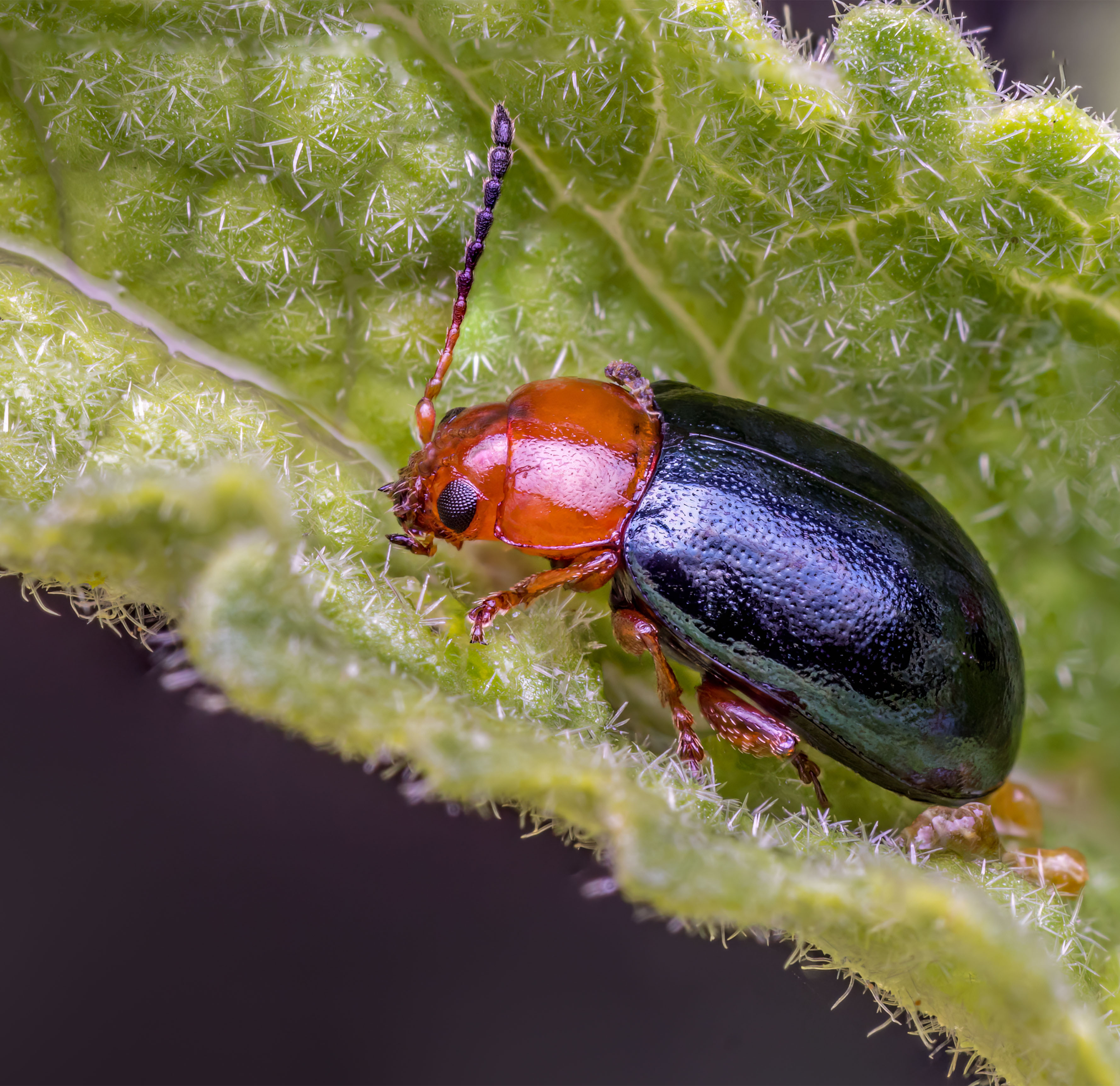
While relatively pest-free, I have struggled with only one issue on my Panicles. Panicle Hydrangeas are prone to a small beetle known as the “Red-Headed Flea Beetle” that usually appears in June. These beetles will eat tiny holes in the leaves, giving it what is known as a “Shot-Hole” look. Adult red-headed flea beetles are only about ¼ inch long, oval, and metallic black, with a reddish to light-brown head.
There are several treatment options available. If you are going the organic route, you can use a product such as Hi-Yield Neem Oil. Just keep in mind that most organic solutions must be applied often for effective control. A more holistic approach is to hand-pick the beetles daily. Products like Liquid Seven, which has Carbaryl as the active ingredient, are also effective; however, be cautious when using a chemical treatment to avoid spraying during the busy part of the day when pollinators are active. You can also use products like Bio-Advanced Tree and Shrub Insect Control. This is a systemic drench that provides several weeks of effective control and is applied around the base of the plant, where it is absorbed through the roots. Again, always use extreme caution and follow the label instructions when applying!
The biggest complaint I get regarding Panicle Hydrangeas is that they tend not to turn the shades of pink, red, and burgundy as advertised and noted on their care tag. Some years can be better than others, but we tend not to get much of the color change. In the south, they tend to turn from white to brown. To get the best color on Panicle Hydrangeas, we need cool night temps and low humidity… I know that is laughable in the south, right! The pictures we see with the pinks and reds tend to be all up north, where August temperatures are not as brutal as ours. Either way, I don’t think this should stop us from planting. It is by far one of the easiest plants to grow, and the summer bloom is always spectacular.
A New Panicle Hydrangea
As I noted above, most Panicle Hydrangeas have a conical bloom. In 2026, Proven Winners introduced the first Panicle Hydrangea with a round Macrophylla-shaped bloom – Powerball®. This is not a cross but instead a true panicle. I have planted one in my garden and am anxious to see if I get the old-fashioned hydrangea feel from a heat-tolerant panicle. It is definitely a breeding breakthrough!
Hydrangea Arborescens
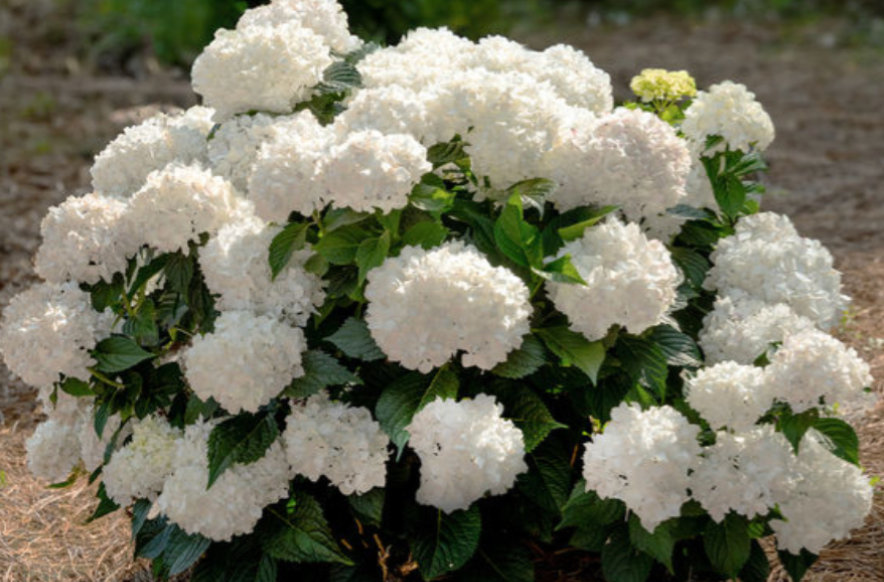
Last, but not least, are the Smooth Leaf Hydrangeas, also known as Hydrangea arborescens. Smooth Leaf Hydrangeas are actually native to North America; however, current breeding has focused on improving large blooms with strong stems. According to PW’s website, the discovery of the variety we know today as Annabelle dates back to 1910. “In 1910, Harriet Kirkpatrick spotted a native wild hydrangea with abnormally large snowball-like blooms. She dug the hydrangea up and brought it back to her garden in Anna, IL. She shared her new hydrangea with fellow gardeners, and it eventually made its way to Dr. Joseph C. McDaniel at the University of Illinois. This hydrangea became available in the 1960s and was given the name Annabelle as a tribute to the “belles” from Anna, who originally discovered the wild specimen.”
One of the biggest problems with Annabelle was that the large blooms would be beaten to the ground during heavy rain, as their stems were not strong enough to support the weight. Over the years, improvements have been made through selective breeding. First was a variety called Incrediball, known for its near-basketball-sized blooms and a steadier stem than Annabelle, though it can still struggle during heavy rain. The latest varieties introduced are Storm Proof by Proven Winners and FlowerFull by First Editions. Both are smaller than their predecessors with a slightly smaller bloom. However, both have sturdy stems that help protect them during heavy rain.
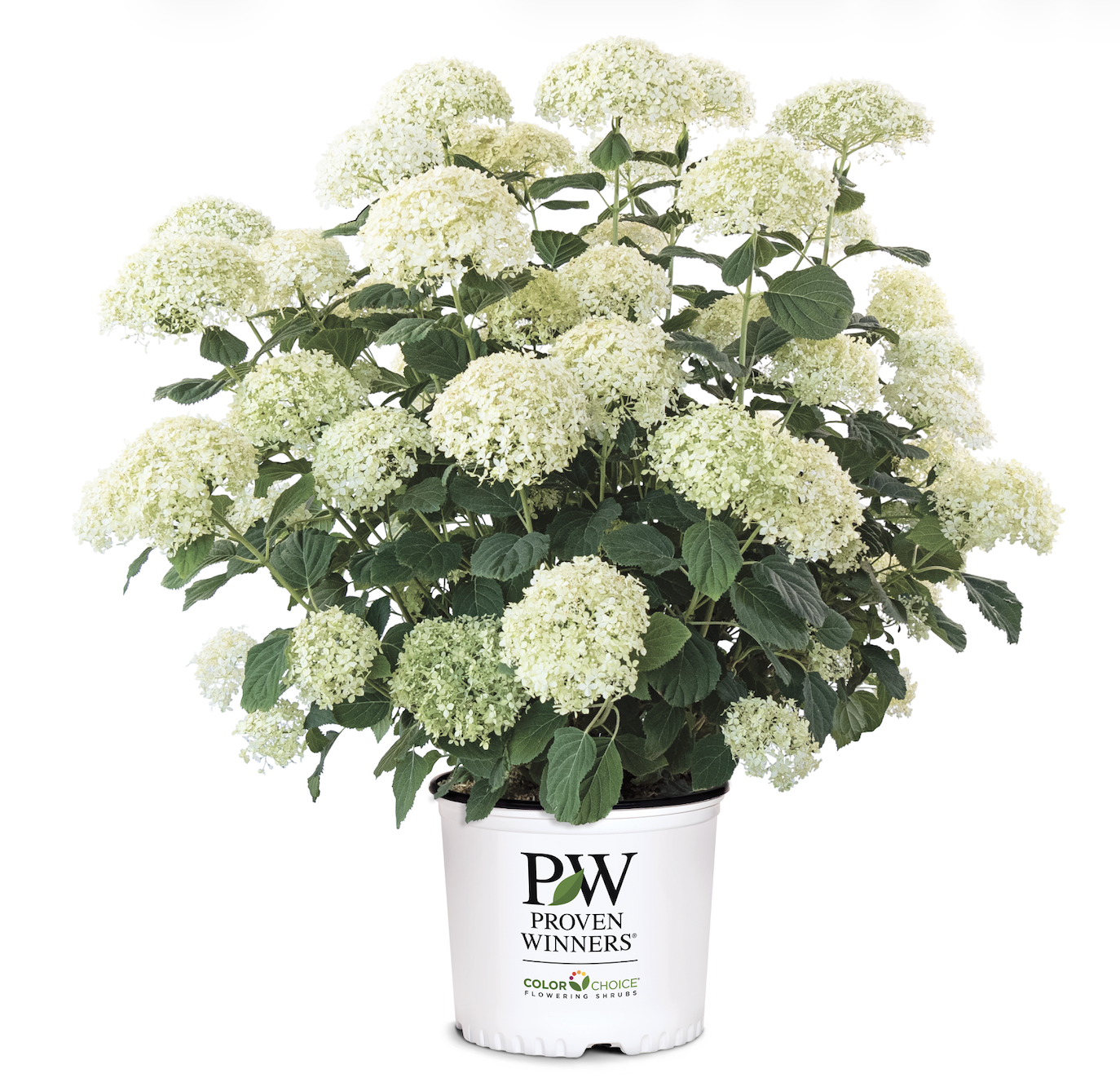
One last note about Hydrangea arborescence… unlike other Hydrangeas, I find this Hydrangea does best when cut back to the ground each year. It makes a much sturdier plant that doesn’t flop as easily in the garden.
Hopefully, if you have given up on other types of Hydrangeas, you will give one of these varieties a try. There is a spot in the garden for at least one. If you are like me, you will end up with several or run out of room in the garden first. If so, extend your landscape… who needs grass anyway!
Jason’s Favorites
Panicle Hydrangeas:
“Quick Fire Tidbit” by Proven Winners
“Puffer Fish” by Proven Winners
“Quick Fire Fab” by Proven Winners
“Vanilla Strawberry” by First Editions
“Strawberry Shake” by Monrovia
“Firelight Punch” by Proven Winners
Smooth Hydrangeas:
“Hydrangea Incrediball” by Proven Winners

Our Locations
Our Company
 Nashville
 Our Services
ClevelandNorth GeorgiaBryson CityKnoxvilleAbout UsChattanoogaOur HistoryOur TeamCareersCommunity InvolvementPromotionsVendor ApplicationOur ServicesOur DepartmentsOur ValuesBusiness Account ApplicationContact Us.svg)