

Hydrangeas - Part 1 - Macrophylla
A story of Hydrangeas

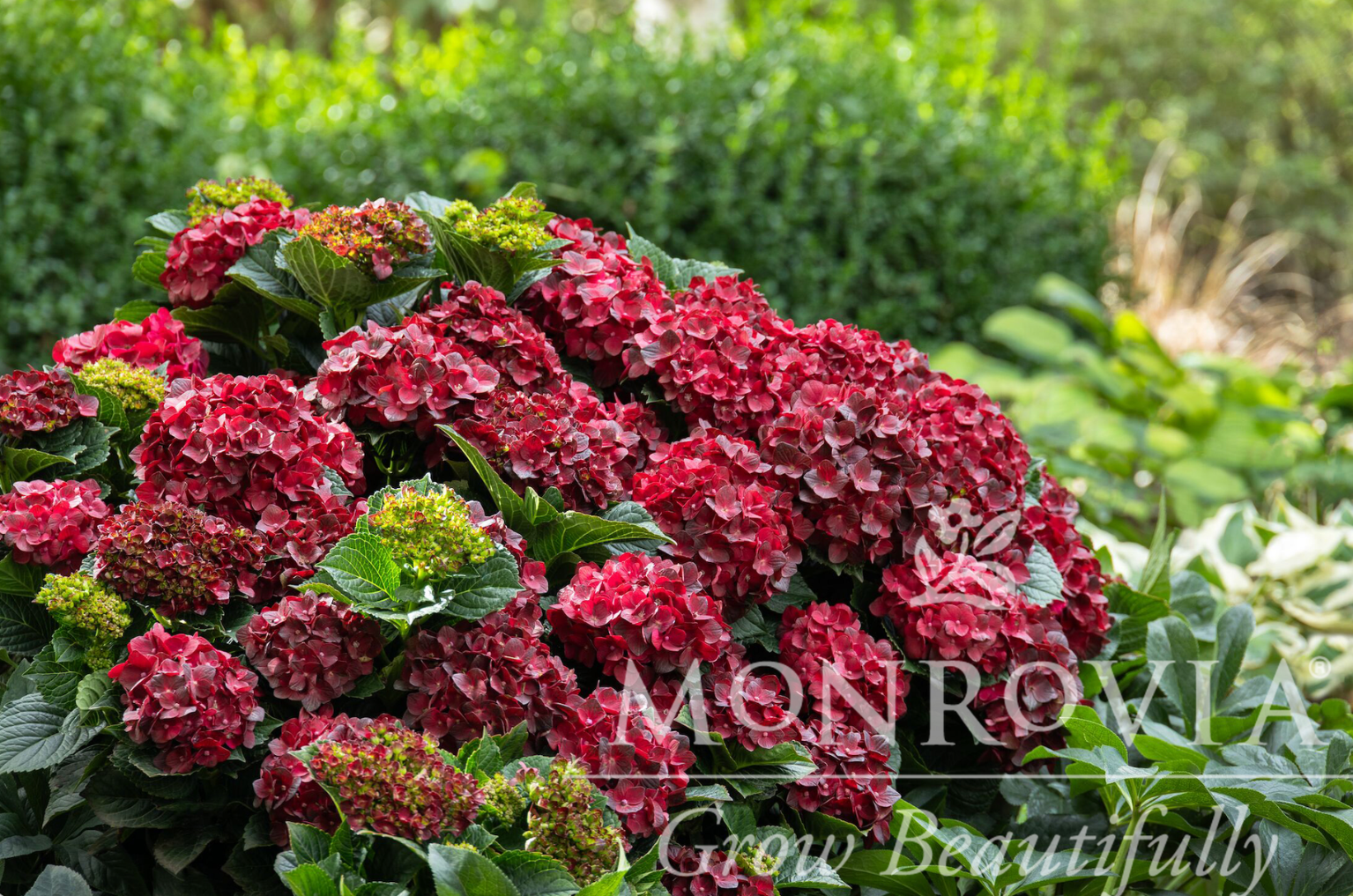
If you are like me, you have a love/hate relationship with Hydrangeas. I have tried and failed repeatedly and have more Hydrangeas in my compost pile than I do in my garden. Yet, while I struggle to be successful, I can’t resist adding a new one (or three) to my collection each time a new variety comes out. This year, Monrovia introduced a deep red Hydrangea called “Centennial Ruby” in celebration of their 100th anniversary, which was beautiful. And before you ask, yes, I bought one along with two other varieties.
For today’s blog, I am going to focus on Macrophylla Hydrangeas. These are also known as Bigleaf Hydrangeas. Some folks will still call them a Snowball Bush, even though a Snowball Bush is actually a viburnum. The other type of Hydrangea is the Panicle Hydrangea. These would be your Limelight types that tend to bloom later and will take more sun. Stay tuned for our next blog when we discuss those.
Macrophylla Hydrangeas
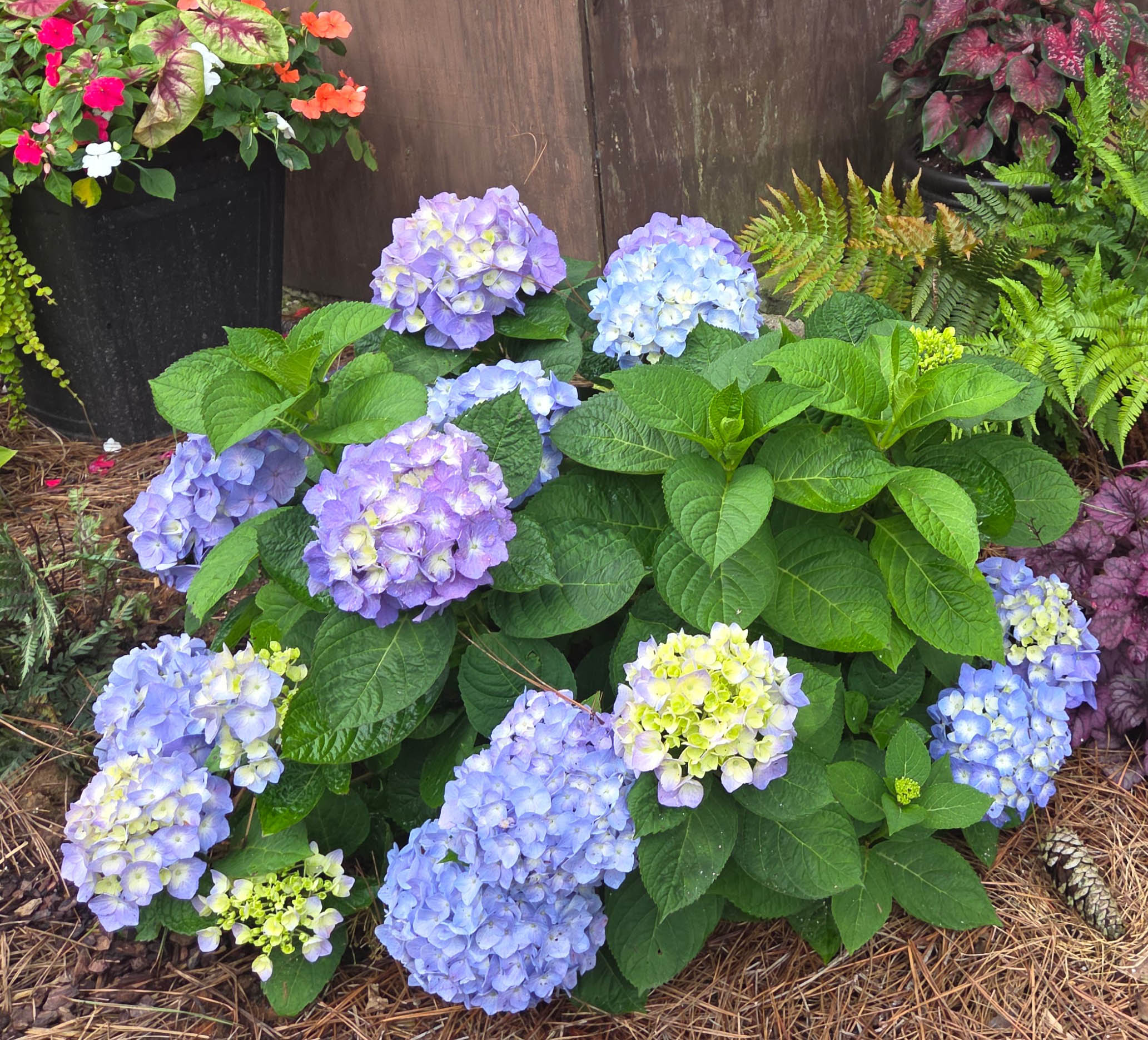
Most of us have fond memories of the traditional blue/pink hydrangea that would bloom in early June at our
grandmother’s house or maybe up against an old farmhouse in our neighborhood. For the gardener, it is the
first sign that spring was drawing to a close and that we were entering the early days of summer. The variety
that we saw “back in the day” was most likely the variety known as “Nikko Blue”. It may have been blue, or it could have been pink, depending on the soil pH. It would bloom in early June and then be done for the season. They would also tend to grow fairly large. Under the right circumstances, they could exceed 6’ tall and wide.
There has been a lot of new breeding since the days of Nikko Blue to try to improve habit, color, and bloom
time. We now have Hydrangeas in multiple sizes, some of which stay as small as 24 inches. We also have a
color spectrum that ranges from pink, purple, blue, and white. This year, we also saw the first dark red come
on the scene. You might think that with all the new introductions, the industry would have solved all of the
issues with Hydrangeas! Unfortunately, even the Hydrangea issue can still frustrate the best of gardeners. So, what are some of the issues I have run across with growing Big-Leaf Hydrangea....
Dancing around our unpredictable weather
It seems like the biggest issue I struggle with is the weather. In the south, we usually have an early February thaw, which allows everything to bud out prematurely, only to be followed by a late freeze that kills Hydrangeas back to the ground. For varieties that bloom on old wood, this usually means another year without blooms. For varieties that bloom on both old and new growth, it will mean waiting until late summer to get a flush of blooms. Unfortunately, there is not a lot we can do about the weather. However, one trick we can use is to cover our Hydrangeas with a heavy cloth or blanket if we are expecting a late freeze. A couple of degrees can make all the difference. This can be hard to do if you are like me and have multiple plants.
The other option is to plant types that are more cold-weather resistant. Breeders like Proven Winners are taking your old-fashioned big leaf Hydrangeas and crossing them with Mountain Hydrangeas (Hydrangea serrate), which tend to have a hardier bud. A few years ago, they introduced a variety called “Let’s Dance Sky View”. This Bigleaf/Mountain cross looks like a traditional Hydrangea but is much hardier. I have one of these in my garden, and while it did get knocked back this Spring due to the cold, it recovered quickly and had buds by Memorial Day.
You might also choose to plant Mountain Hydrangea. These are your lace cap types, such as “Tuff Stuff- Ah-Ha” or the old-fashioned “Bluebird”. The plant looks
very similar to Bigleaf Hydrangeas; however, the bloom looks somewhat different. Even if you prefer a traditional Bigleaf Hydrangea, I highly suggest making a spot for a Lace-Cap somewhere in your garden.
The truth about the shade
One of the big misconceptions about Hydrangeas is that they are shade plants. This is only half true. In our southern climate, Bigleaf Hydrangeas do need afternoon shade; however, to thrive, they really need sun until at least noon. Dappled shade after 2 p.m. is preferred. If your Hydrangeas get full sun after 2 p.m., they will struggle and most likely wilt a little in the heat of the day, but will bounce back after the sun goes down.
Patience saves the day

I have found the most important thing with Hydrangeas is to be patient. I know, I hate that word, too. My personal rule of thumb for a plant is that by year two, if you don’t show some promise, I permanently transplant you to the compost bin. However, like many of us, some Hydrangeas need a little more time to develop and flourish. In the plant world, we often hear the phrase weep, creep, and leap. This means newly planted or transplanted plants struggle the first year, put on a little growth in their second year, and then flourish in their third year. For Hydrangeas, I believe it takes at least 3 years, if not 4, for them to take off. To give your plant the best opportunity, plant in the correct light conditions, use a root stimulator when planting, such as Espoma Bio-Tone, and do not allow it to dry out the first year. At the same time, do not over-water.
The #1 question that I get about Hydrangeas is “Why isn’t my Hydrangea Blooming?” Most likely it is due to the cold temperatures mentioned above that bit back the buds. However, if you have a Hydrangea variety that only blooms on “old growth,” like the “Nikko Blue” Hydrangea, you must be very careful when pruning. If you prune back too late in the season, you will cut off next year’s blooms because the buds have already been set. I suggest in either case, give it a little fertilizer, correct light exposure, and have a little patience.
And when all else fails, go ahead and transplant to the compost pile... It will be okay. Don’t waste space in the garden on something that is less than spectacular. Hopefully these tips will help you have beautiful hydrangea bushes!
Our Locations
Our Company
 Nashville
 Our Services
ClevelandNorth GeorgiaBryson CityKnoxvilleAbout UsChattanoogaOur HistoryOur TeamCareersCommunity InvolvementPromotionsVendor ApplicationOur ServicesOur DepartmentsOur ValuesBusiness Account ApplicationContact Us.svg)